Resource-Efficient Computer Vision
Efficient perception under real resource limits
We design computer-vision systems that reduce computation and latency without treating accuracy as an afterthought. Our work simplifies detector pipelines, targets the stages that dominate runtime, and adapts model execution to the structure of each application so that capable perception can move closer to sensors and resource-constrained platforms.
Student: Rikesh Naresh Mehta
Collaborator: Hyungshin Kim
Selected publication
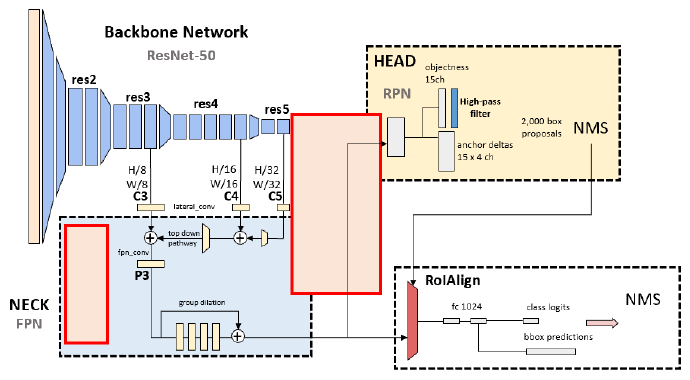
Efficient two-stage detection for on-board remote sensing
We simplify feature extraction in two-stage detectors and recover accuracy through better positive-anchor selection and high-pass filtering in the region proposal network. The resulting design lowers computation and improves throughput while retaining competitive detection accuracy on high-resolution satellite imagery.
Our ongoing work under review extends this direction through joint optimization of DCNN inference and non-maximum suppression for satellite imagery, targeting higher throughput with tightly controlled accuracy loss.
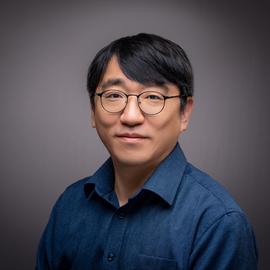
Hoeseok Yang
Associate Professor of Electrical and Computer Engineering
My research interests include hardware/software co-design of AI systems, system security, and embedded system design methodology.